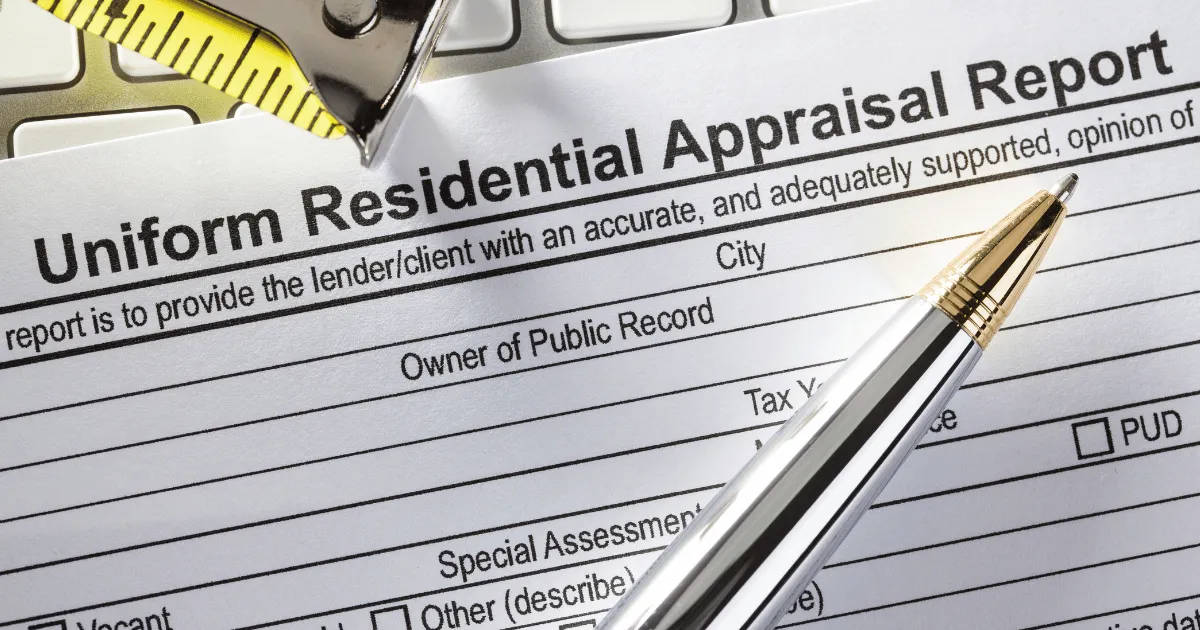
What an appraisal contingency does
When you finance a home, your lender usually orders an appraisal. A licensed appraiser estimates the home's market value based on its condition and recent nearby sales.
An appraisal contingency is a clause in your purchase contract. It says that if the appraised value is below your agreed price, you aren't locked in at that price. Exact wording comes from your contract, so read it with your real estate agent.
Why a low appraisal matters
Lenders set your loan amount using the lower of the purchase price or the appraised value. If the appraisal is low, the loan amount your down payment supports gets smaller, and you'd need more cash to close at the same price.
Here is a hypothetical example. You agree to pay $400,000 and plan to put 10% down. The home appraises at $385,000. Your lender works from $385,000, so the $15,000 gap isn't covered by the loan. You'd need to bring that extra cash, renegotiate, or use your contingency to exit.
Your options after a low appraisal
With the contingency in place, you usually have a few paths:
- Ask the seller to lower the price to the appraised value.
- Meet in the middle, with each side covering part of the gap.
- Pay the difference yourself in cash.
- Ask your lender about a reconsideration of value if you have better comparable sales.
- Cancel the contract within the contingency period, as your contract allows.
Appraisal gap clauses
In competitive markets, some buyers add an appraisal gap clause. It's a promise to cover a set amount above the appraised value, such as the first $10,000 of any shortfall. Above that amount, the contingency still applies.
A gap clause can make your offer stronger, but only agree to an amount you could actually pay in cash on top of your down payment and closing funds.
Waiving the contingency
You can waive the appraisal contingency entirely. That tells the seller you'll close at the agreed price no matter what the appraisal says. If it comes in low, you would need to cover the full gap, or risk your earnest money if you can't close. It's a real risk, so talk it through with your agent and loan consultant first.
Timing and deadlines
Your contract sets how many days you have to get the appraisal and act on it. If you miss the deadline, the contingency may expire and you could lose the right to exit. Contract terms and local customs vary, so your agent can tell you what's normal where you're buying.
Respond quickly to appraisal scheduling requests and stay in touch with your loan consultant so the report arrives in time.
Getting ready before you offer
Get pre-approved so you know your budget and how much cash you have beyond your down payment. Ask your agent to review recent sales for the home, and decide in advance how much of a gap, if any, you'd be comfortable covering.